Non-Alcoholic Beer on Draft: Why Canadian Venues Should Make Room for NA Taps
Non-alcoholic beer has moved well beyond the backup bottle in the bottom corner of the fridge. In Canada, no- and low-alcohol drinking is becoming a year-round behaviour, and venues are starting to treat non-alcoholic beer as part of the main beverage program rather than a compromise.
For restaurants, breweries, bars, hotels, event operators, and private venues, this creates a practical question: should non-alcoholic beer be available on draft?
The answer depends on demand, product supply, line management, and staff discipline. But for the right venue, an NA beer tap can support premium service, better presentation, faster pours, and a more complete menu for guests who are moderating.
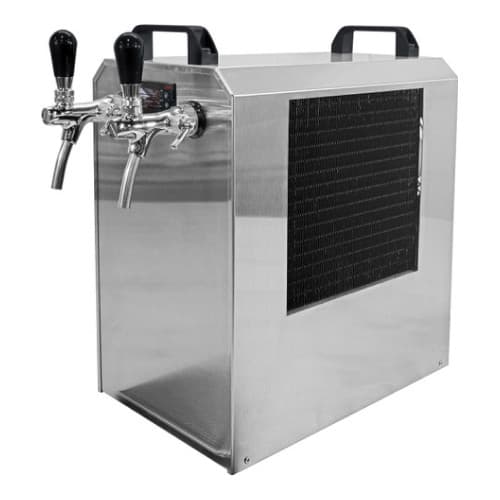
Purotap's portable beverage dispensers, jockey boxes, CO2 tanks, and keg accessories can support draft beverage programs when the system is matched to the keg, product, pressure, and cleaning routine.
Quick Answer
Non-alcoholic beer can be served on draft when the venue has the right keg supply, cold storage, dispense gas, regulator, coupler or disconnect, beverage line, faucet, and cleaning process. It works best for venues that already sell enough NA beer to justify a dedicated tap, or for operators using mobile draft equipment at events where moderation-friendly options matter.
Why NA Beer Belongs in the Draft Conversation
Canadian drinking habits are changing. More guests are moderating alcohol intake, but they still want a beverage that feels intentional at a restaurant table, bar, brewery, hotel lounge, sports venue, or catered event.
That is where non-alcoholic beer fits. It gives guests:
- A familiar beer format without full alcohol content
- A beverage that pairs naturally with food
- A social drink that does not feel like a soft drink
- More choice during lunch, work events, driving occasions, and family gatherings
- A better option for Dry January, Dry February, and year-round moderation
NIQ has reported that Canada's no/low alcohol category has reached $222M in annual sales and continues to show growth momentum into 2026. That matters for on-premise operators because moderation is no longer limited to one month of the year.
Why Draft Can Improve the NA Beer Experience
Cans and bottles are still useful, especially when demand is uncertain. But draft service can make non-alcoholic beer feel more premium and more integrated into the venue.
Draft NA beer can help with:
- Faster service during busy periods
- Better visual presentation in proper glassware
- Menu credibility when placed beside full-strength beer
- Less packaging handling in high-volume service
- Flexible event service from kegs
- A stronger signal that the venue takes non-alcoholic guests seriously
For breweries and taprooms, draft also lets customers try a non-alcoholic beer in the same environment where they sample lagers, IPAs, stouts, and seasonal releases.
Where a Non-Alcoholic Beer Tap Makes Sense
Restaurants and pubs
Restaurants can use NA beer as a food-pairing option for guests who want the flavour and ritual of beer without the alcohol. A single well-chosen NA lager, pale ale, or IPA can serve more guests than a long list of slow-moving bottled alternatives.
Breweries and taprooms
Breweries can use an NA tap to keep non-drinking guests included in the taproom experience. This is especially useful when groups arrive with mixed drinking preferences.
Hotels, lounges, and private venues
Hotels and private venues serve guests across many occasions: business travel, weddings, conferences, airport-style lounges, and corporate events. A draft NA beer option can support moderation without lowering the perceived quality of the beverage program.
Events and mobile bars
For weddings, festivals, corporate events, sports viewing, and pop-ups, a kegged NA beer option can reduce reliance on cans while giving guests a proper draft pour. A jockey box is often useful outdoors because it chills through ice, while a Mobichill portable beverage dispenser can fit indoor counters where power is available.
The Equipment Needed for Draft NA Beer
Non-alcoholic beer uses the same general draft logic as regular beer, but the product should be handled carefully because alcohol is not providing the same preservative effect as full-strength beer.
1. Keg or beverage source
Confirm whether the NA beer is supplied in a standard commercial keg, a smaller keg, or a Corny-style keg. The keg type determines the coupler or disconnects needed for the system.
Purotap carries Corny keg options such as:
2. Cold storage and chilling
NA beer should stay cold before and during service. Warm kegs create foam, inconsistent pours, and quality problems. For mobile service, the chilling method needs to match the event setup.
Common options include:
- Refrigerated keg storage
- A jockey box with ice and water around the coils
- A powered portable dispenser
- A permanent draft system with chilled storage
3. CO2 tank and regulator
Most draft beer systems use CO2 to push beer from the keg to the faucet. The regulator controls pressure from the tank to the keg.
Purotap CO2 options include:
Pressure should be set according to the keg supplier's instructions, beer temperature, line length, and dispense equipment. Do not assume that one pressure setting works for every beer or every tap.
4. Coupler or ball-lock disconnects
Standard commercial kegs usually need a Sanke coupler. Corny kegs need separate gas and liquid disconnects.
Relevant accessories:
5. Beverage line, faucet, and tower
The beverage line carries beer from the keg to the faucet. The line length, diameter, restriction, and temperature all affect pour quality. The faucet should be clean, easy to access, and clearly assigned to the NA product.
If the venue serves both alcoholic and non-alcoholic beer, staff should avoid confusion by labelling lines, tap handles, kegs, and cleaning records clearly.
6. Cleaning process
Line cleaning is especially important for NA beer. Draft lines, faucets, couplers, and disconnects should be cleaned on a reliable schedule and immediately after temporary event service.
For mobile equipment, do not leave beer sitting in coils or lines after the event. Flush and clean the system according to the equipment and beverage supplier's guidance.
Menu Strategy for NA Beer on Draft
An NA tap only works if guests know it exists. Hiding it at the bottom of the menu makes the product feel like an afterthought.
Better approaches include:
- Listing NA beer beside beer, not only under soft drinks
- Offering it in proper glassware
- Training staff to mention it naturally
- Pairing it with lunch, patio, and event menus
- Using one dependable option before adding more SKUs
- Rotating seasonal NA styles only when demand supports it
For many venues, the best starting point is one clean, approachable NA beer that staff can pour consistently.
Common Mistakes to Avoid
Adding a tap before confirming demand
Draft lines need turnover. If the product moves too slowly, cans may be a better starting point until the venue proves demand.
Treating NA beer like a soft drink
NA beer is still a brewed product with freshness and handling needs. Keep it cold, follow supplier instructions, and clean equipment properly.
Using the wrong keg connection
Confirm whether the keg uses a Sanke coupler, ball-lock fittings, or another connection before ordering equipment.
Overbuilding the menu
One good NA beer tap is stronger than several low-turnover options. Keep the program focused until sales justify expansion.
Forgetting mobile service logistics
For events, plan the keg, CO2 tank, regulator, coupler, ice or power, spare fittings, drip control, glassware, and cleaning plan before setup day.
Recommended Product Paths
Restaurant or bar testing one NA tap
Start with one kegged NA beer, the correct coupler, a CO2 tank, regulator, beverage line, and a dedicated faucet or tower. If the venue already has draft infrastructure, confirm line compatibility and cleaning before adding the product.
Mobile event or outdoor service
Use a jockey box, CO2 tank, regulator, matching keg connection, ice, and a post-event cleaning plan.
Indoor counter or tasting station
Use a portable beverage dispenser such as a Mobichill unit when power is available and the service point needs a compact footprint.
Kegged NA beer experiments
Use the CO2, Kegs & Accessories category to plan tanks, kegs, quick disconnects, and other draft hardware.
Research Sources
This guide was informed by NIQ's Canadian no/low alcohol category analysis, NIQ's 2026 on-premise beverage trend analysis, the Brewers Association Draught Beer Quality Manual, and Micro Matic draft beer maintenance guidance.
Frequently Asked Questions
Can non-alcoholic beer be served on draft?
Yes. Non-alcoholic beer can be served on draft when it is supplied in a compatible keg and kept cold through the correct dispense setup. The system needs proper gas pressure, keg connection, beverage line, faucet, and cleaning process.
What equipment do I need for an NA beer tap?
You typically need a keg, CO2 tank, regulator, coupler or ball-lock disconnects, gas line, beverage line, faucet or tower, refrigeration or a chilling method, and beer line cleaning supplies.
Does non-alcoholic beer need CO2 to pour from a keg?
Most draft NA beer setups use CO2 to pressurize the keg and move beer through the line. Pressure should be set according to the product, temperature, line length, and equipment setup.
Is draft NA beer better than cans or bottles?
Draft is not always better, but it can create a more premium experience when the venue has enough demand and good line maintenance. Cans or bottles may be better when sales volume is uncertain.
Can the same draft system serve alcoholic and non-alcoholic beer?
A draft system can support both types of beer when each product has the correct keg connection, line, pressure, and cleaning process. Clearly label taps, kegs, and lines so staff do not confuse alcoholic and non-alcoholic products.
How often should NA beer draft lines be cleaned?
Follow the beer supplier's instructions and standard draft beer cleaning guidance. For temporary event setups, clean the lines, coils, faucets, couplers, and disconnects immediately after service.