Jockey Box vs Portable Beer Dispenser: Which Draft Setup Fits Your Event?
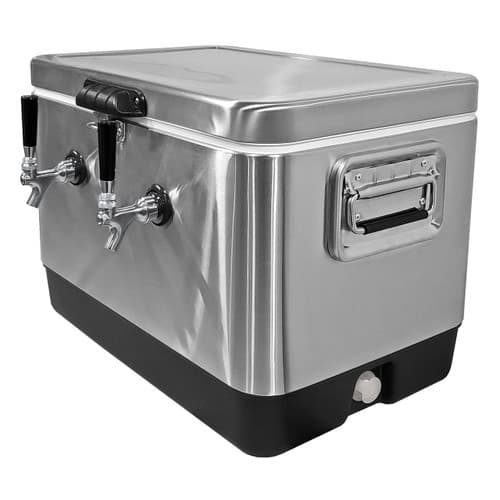
For mobile draft service, the two most practical options are usually a jockey box or a powered portable beer dispenser. Both move beer or another draft beverage from a keg to a tap, but they solve different service problems.
A jockey box uses ice and stainless coils inside a cooler. Beverage travels from the keg through the coil and chills before it reaches the faucet. A powered portable dispenser, such as a Mobichill unit, uses an electric refrigeration system to chill beverage as it pours.
Quick Answer
Choose a jockey box when you need simple, rugged, ice-based draft service for outdoor events, catering, festivals, patios, or mobile bars. Choose a powered portable beer dispenser when you have reliable power, limited ice logistics, and want compact countertop draft service for beer, wine, soda, or other beverages.
When a Jockey Box Makes Sense
Jockey boxes are strong for temporary service because they do not need power. They are easy to move, easy to stage outdoors, and practical when a keg can stay nearby while the cooler sits at the serving point.
They are especially useful for:
- Weddings and private events
- Beer festivals and pop-ups
- Mobile bars and caterers
- Patio service
- Outdoor draft stations
The main planning requirement is ice. The cooler needs enough ice contact around the coils to keep pour temperature consistent through the event.
When a Portable Beer Dispenser Makes Sense
Powered portable dispensers are better when the serving area has stable electrical power and the operator wants a smaller countertop footprint. Mobichill-style units can be useful for tasting counters, home draft setups, small commercial counters, and mobile service where power is easier than managing large ice loads.
They are especially useful for:
- Tasting rooms
- Small bars and counters
- Home draft setups
- Draft wine or cocktail service
- Compact mobile beverage stations
The main planning requirement is matching the unit output and product lines to the service volume.
What They Have in Common
Both options still need the right supporting equipment. A complete draft setup normally includes:
- Keg or beverage source
- CO2 or nitrogen, depending on beverage
- Regulator
- Coupler or ball-lock disconnects
- Beverage and gas line
- Routine cleaning process
The dispenser is only one part of the draft system. Pressure, line setup, beverage type, and serving environment all affect pour quality.
Frequently Asked Questions
Is a jockey box better than a portable beer dispenser?
A jockey box is better for simple outdoor event service where ice is available and power is limited. A powered portable beer dispenser is better for compact service locations where power is available and the operator wants refrigeration built into the unit.
Can jockey boxes and portable dispensers pour drinks other than beer?
Yes. Both can be used for beer, wine, soda, sparkling water, draft cocktails, and other kegged beverages when the gas, pressure, fittings, and line setup match the drink.
What equipment do I need besides the dispenser?
Most draft setups need a keg, gas tank, regulator, coupler or quick disconnects, beverage line, gas line, and cleaning supplies. Some setups also need adapters based on keg type and faucet configuration.
Which option is better for mobile bars?
Mobile bars often use jockey boxes because they are rugged, ice-based, and easy to stage outdoors. Portable powered dispensers can also work well when the mobile bar has reliable power and wants a smaller counter setup.