CO2 Tanks for Beverage Dispensing: What Restaurants, Events, and Home Bars Should Know
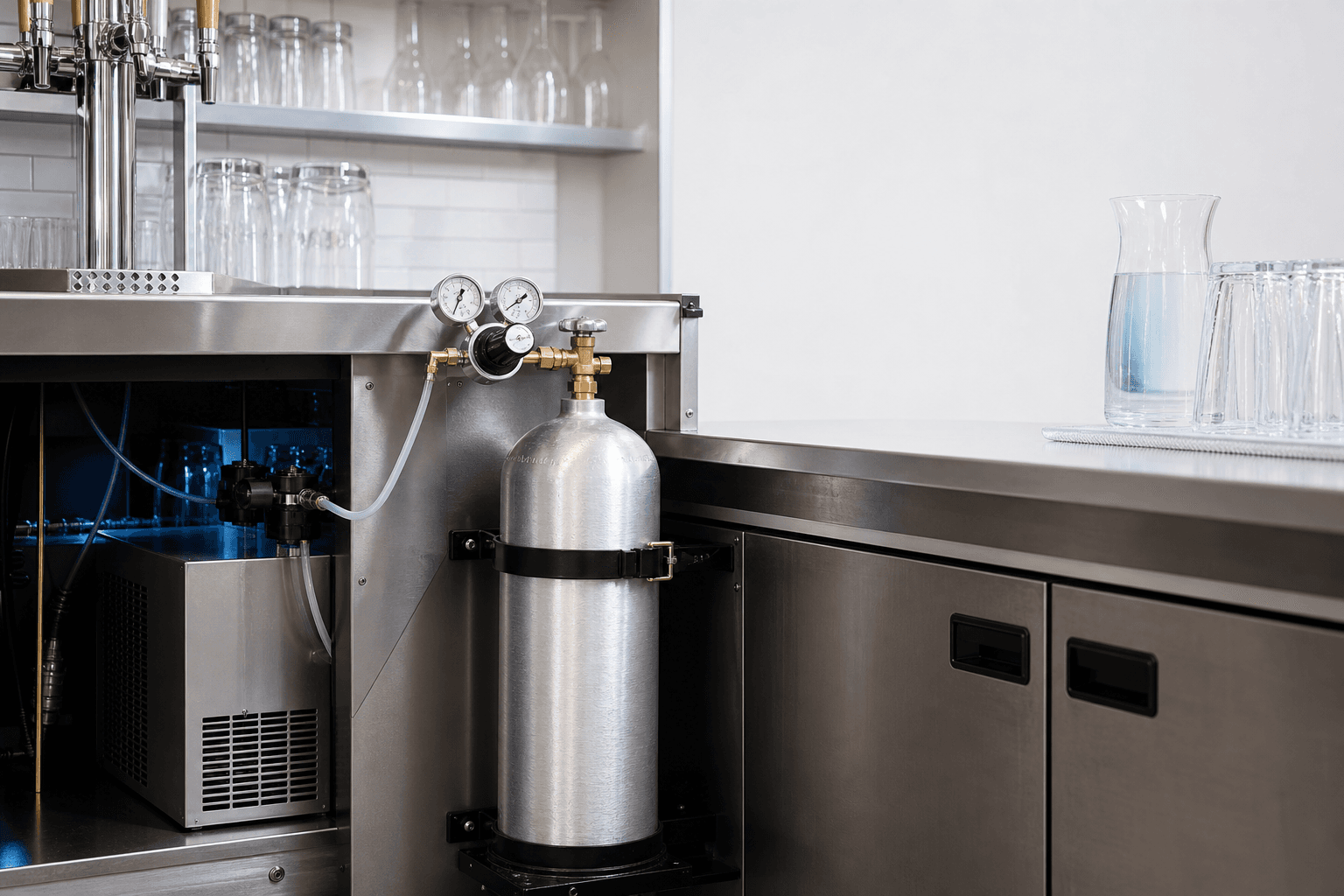
CO2 tanks are one of the most important parts of a beverage dispensing setup, but they are often treated as an accessory. For sparkling water, draft beer, soda, and some kegged cocktails, the CO2 supply affects carbonation, pressure, pour quality, refill planning, and safe equipment placement.
The right tank setup depends on what you are serving, how often you pour, where the cylinder will sit, and whether the system is permanent, portable, commercial, or residential.
Quick Answer
A CO2 tank stores compressed carbon dioxide used to carbonate water, maintain pressure in a keg, and push beverages through lines to a faucet or tower. Restaurants, offices, mobile bars, event operators, and home bars should choose a tank size that matches service volume, refill access, available space, regulator compatibility, and safe upright storage.
Purotap carries 2.5 lb CO2 tanks, 5 lb CO2 tanks, and related CO2, keg, and beverage dispensing accessories.
What CO2 Does in a Beverage System
CO2 has two main jobs in beverage dispensing:
- It carbonates water or helps maintain existing carbonation in beverages.
- It provides pressure that moves beverage from a keg, tank, or carbonator to the faucet.
In a sparkling water dispensing system, CO2 dissolves into chilled water inside the carbonation process. In a draft beer or kegged beverage setup, CO2 usually acts as dispense gas, keeping the keg under pressure so liquid can travel through the beverage line and pour properly.
This is why CO2 planning matters before installation. A great tower or dispenser will still perform poorly if the gas supply is undersized, empty, poorly placed, or connected to the wrong fittings.
Common Beverage Uses for CO2 Tanks
Sparkling water
Sparkling water systems use CO2 to carbonate chilled water on demand. Commercial setups also need filtration, chilling, a carbonator, a serving tower or faucet, and a safe place for the cylinder.
The Purotap 20 GPH Undercounter Water System includes the major components needed for chilled still and sparkling water service, including CO2 tank planning as part of the system.
Draft beer
Draft beer uses CO2 to push beer from the keg through the line. The pressure setting depends on temperature, line length, line restriction, carbonation level, and dispense equipment.
For mobile beer service, CO2 is used with a jockey box, portable beverage dispenser, keg, regulator, coupler or disconnect, and beverage line.
Soda, dirty sodas, and mocktails
CO2 supports the carbonated base used in soda programs, dirty sodas, spritzes, and mocktails. In many operations, sparkling water from a dedicated dispenser gives staff a consistent carbonated base that can be finished with syrups, citrus, bitters, creams, or other menu ingredients.
Kegged cocktails and other draft beverages
Some kegged cocktails, wines, teas, cold brew drinks, and non-alcoholic beverages can be served from draft equipment when the gas, pressure, fittings, and cleaning process match the beverage. CO2 is common, but it is not always the right gas for every product. Nitrogen or a gas blend may be better for some beverages.
2.5 lb vs 5 lb CO2 Tanks
For many Purotap customers, the practical decision is between a compact 2.5 lb tank and a larger 5 lb tank.
2.5 lb CO2 tank
A 2.5 lb CO2 tank is useful when space is tight or the system is used lightly. It can suit residential sparkling water setups, compact home bars, small counters, or portable service where low weight matters.
Choose a 2.5 lb tank when:
- Space is limited
- The setup is residential or light commercial
- Portability matters
- Refills are easy to access
- You want a compact backup cylinder
5 lb CO2 tank
A 5 lb CO2 tank is a better fit for higher-volume use because it offers more capacity between refills while still being manageable for many commercial, event, and home bar setups.
Choose a 5 lb tank when:
- The system serves a restaurant, office, cafe, venue, or busy home bar
- You expect repeated pours throughout the week
- The tank will support draft beer or sparkling water service during events
- Refill trips need to be less frequent
- There is enough secure space for upright storage
What Else You Need Besides the Tank
A CO2 cylinder is only one part of the gas side of a beverage system. Most setups also need:
- A compatible regulator
- Gas line
- Proper clamps and fittings
- A keg coupler or ball-lock gas disconnect
- A beverage line
- A faucet, tower, jockey box, or dispenser
- A refill or exchange source
- A safe upright mounting location
For Corny keg setups, the gas line usually connects through a gas-side quick disconnect such as the Ball Lock Gas Quick Disconnect. The liquid side uses a separate connection, such as the Ball Lock Liquid Quick Disconnect.
Placement and Safety Basics
CO2 tanks should be treated as compressed gas cylinders, not ordinary storage containers. The Canadian Centre for Occupational Health and Safety identifies carbon dioxide as a compressed gas and asphyxiant, and notes that high concentrations can displace oxygen in air. It also recommends using the appropriate regulator, protecting cylinders from damage, and securing cylinders upright.
For restaurants, offices, venues, and home bars, the practical setup priorities are:
- Keep the cylinder upright and secured
- Use a regulator appropriate for CO2 service
- Protect the cylinder, valve, regulator, and lines from impact
- Avoid placing cylinders in hot, unventilated, or enclosed spaces
- Keep the tank accessible for shutoff, inspection, and refill
- Close the cylinder valve when the system is being moved or serviced
- Have staff understand who checks tank level, valve position, and refill timing
Local rules, building requirements, and workplace safety policies can vary. Commercial operators should confirm requirements for cylinder storage, ventilation, and staff handling before installing or relocating tanks.
Buying Checklist
Before choosing a CO2 tank, answer these questions:
- What beverages will the system serve?
- Is CO2 being used for carbonation, dispense pressure, or both?
- How many drinks will be poured during peak service?
- Will the setup be permanent, portable, or used only for events?
- Where will the tank be secured upright?
- Is there enough ventilation and access around the cylinder?
- Which regulator, fittings, couplers, and disconnects are required?
- Where will the tank be filled or exchanged locally?
- Does the tank need to fit under a counter, inside a cabinet, or beside equipment?
- Is a backup tank needed for busy service or events?
Common Mistakes to Avoid
Buying the dispenser first and planning CO2 later
CO2 placement affects installation, staff workflow, refill access, and equipment compatibility. Plan the tank before finalizing the system layout.
Choosing the smallest tank only because it fits
A small tank can be useful, but it may create too many refill trips for commercial or event use. Match tank size to service volume, not just available space.
Using the wrong fittings
Draft beer, Corny kegs, sparkling water systems, and portable dispensers can use different connections. Confirm the regulator, disconnect, coupler, gas line, and beverage line before setup day.
Ignoring ventilation and access
CO2 is colourless and odourless. Tanks should not be hidden in places where staff cannot check them, secure them, or respond quickly if something needs attention.
Forgetting that tanks usually ship empty
CO2 tanks commonly ship empty because of transport rules. Plan your local refill or exchange source before the system is needed.
Recommended Product Paths
Compact home bar or light sparkling water setup
Start with the 2.5 lb CO2 Tank if space is tight and refill access is convenient.
Restaurant, office, or higher-volume sparkling water service
Consider the 5 lb CO2 Tank and a complete system such as the Purotap 20 GPH Undercounter Water System.
Mobile beer or event service
Pair a CO2 tank with a jockey box, portable beverage dispenser, compatible keg, regulator, and correct gas and beverage connections.
Replacement parts and keg connections
Use the CO2, Kegs & Accessories category to find tanks, kegs, and quick disconnects for draft beverage setups.
Research Sources
This guide was informed by the Canadian Centre for Occupational Health and Safety carbon dioxide profile, OSHA compressed gas cylinder handling guidance, the NIST compressed gas safety program, and the Brewers Association Draught Beer Quality Manual.
Frequently Asked Questions
What is a CO2 tank used for in beverage dispensing?
A CO2 tank supplies carbon dioxide for carbonation and dispense pressure. It can carbonate water, maintain pressure in a keg, and push beer, sparkling water, soda, cocktails, or other draft beverages through lines to a faucet.
What size CO2 tank do I need for sparkling water?
A 2.5 lb tank can work for compact or lighter-use sparkling water setups. A 5 lb tank is often more practical for restaurants, offices, venues, and other higher-volume service because it reduces refill frequency.
Do draft beer systems need CO2?
Most draft beer systems use CO2 to pressurize the keg and move beer through the line to the faucet. Some beverages may use nitrogen or gas blends, but CO2 is common for standard draft beer and many mobile dispensing setups.
Are CO2 tanks shipped full?
CO2 tanks commonly ship empty because of transport requirements. Buyers should plan to fill or exchange the tank through a local beverage gas, welding gas, or compressed gas supplier.
Can one CO2 tank support sparkling water and beer?
One CO2 source can sometimes support more than one beverage setup if the system is designed with the correct regulator, pressure control, fittings, and safety planning. Do not assume one tank can run every system without confirming pressure requirements and compatibility.
Where should a CO2 tank be stored?
Store and use a CO2 tank upright, secured, protected from damage, and in a well-ventilated location with access to the valve and regulator. Commercial operators should also confirm local requirements for compressed gas cylinder storage and ventilation.